
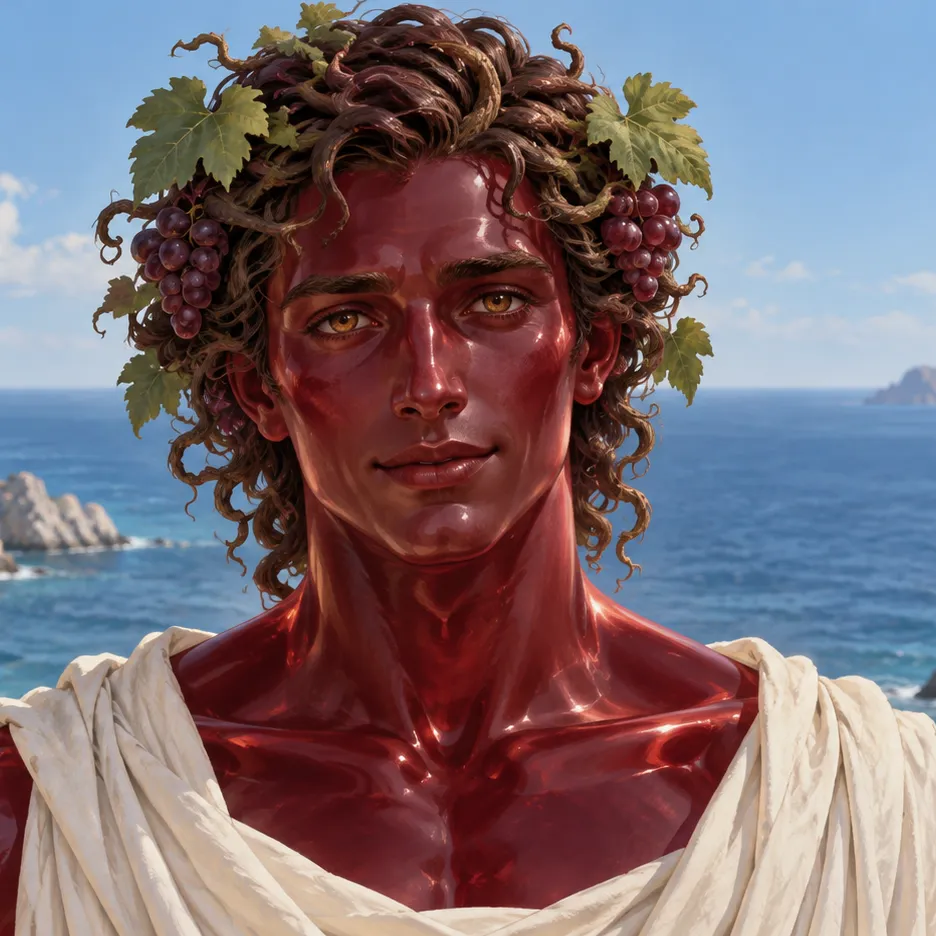
The knot fell apart before the sailor had finished pulling it tight.
He stared at the rope between his hands. Then he caught the young man’s wrists again, wound three turns around them, and braced a foot against the bench.
The helmsman heard the hemp creak. He had watched that sailor haul a laden anchor out of mud. There was nothing wrong with his strength.
The rope slipped onto the deck.
Their captive rubbed neither wrist. He sat in his purple cloak with the sea wind lifting his dark hair and looked from one man to another, interested, as though they were preparing an entertainment for him.
“Wet it,” said the captain.
The sailor lowered the rope over the side.
They had found the young man alone on a headland. From the ship, his cloak had looked expensive enough to justify putting in. Close by, the clasp and the unmarked hands had settled the matter. Someone would pay to have him back. If no one would, someone would pay to keep him.
The helmsman had held the ship steady while they brought him aboard.
Now he put his weight against the steering oar, turning the bow toward the strip of beach they had just left.
“Who told you to do that?” the captain asked.
“Put him ashore.”
“We’ve only just taken him off it.”
The sailor returned with the wet rope. This time he bound the young man’s ankles as well as his wrists, lashing them to the bench. Water ran from the hemp and darkened the planks.
The captive shifted his foot. Every turn loosened. The whole wet length lay at his feet.
No one reached for it.
The helmsman’s palms had begun to sweat. A god could wear a beautiful face. He knew that much. He knew also that the great ones did not always announce themselves before a man made his mistake.
“We can’t hold him,” he said. “You’ve seen it.”
The captain stooped, picked up the rope, and examined it for cuts.
“Then we’ll keep an eye on him.”
“Look at his hands.”
The captain did. So did the others. The young man spread his fingers for them. There was no rope burn, no broken nail, no mark at all.
The youngest sailor laughed once, too loudly.
“Enough,” said the captain. “Raise the sail.”
The men moved with relief. A familiar order gave them something to do. Canvas climbed the mast; the yard swung overhead. The helmsman kept the bow toward the beach until the captain came aft and planted his hand beside the helmsman’s on the oar.
“Out,” he said.
Beyond the captain’s shoulder, their captive was watching.
The helmsman thought of the small purse under his sleeping mat. His share from the last voyage was still in it. He could remember another pair of bound hands, a man stumbling up a quay, the captain complaining that they had not got enough for him. He had taken his money then.
“Keep my share,” he said.
The captain’s grip slackened.
“What?”
“From this one. Keep it. Put him back.”
“You think you can buy the rest of us out with your few coins?”
“I think we should let him go.”
For a moment the only noise was the sail beating above them. Then the captain shoved him hard against the stern rail and forced the steering oar over.
“Learn the difference between a ship and your own fishing boat.”
The wind caught. The beach slid away behind the captain’s back.
The young man smiled.
What the Ship Carried
The first trickle passed under the helmsman’s heel.
He looked down, expecting seawater. A red thread was running between two planks. It touched another and spread. The smell reached him before the liquid reached the captain: crushed fruit, warm skins, the sweetness of a jar opened in a cool room.
Wine.
One sailor dropped to his knees. He scooped a palmful from the deck and tasted it.
The helmsman watched his expression change. The man closed his eyes. His shoulders sank; the lines beside his mouth eased. When he opened his eyes again, he was laughing quietly.
“Captain.” He held up his dripping hand. “Captain, taste this.”
The captain crouched without releasing the steering oar. He touched two fingers to the wine, put them in his mouth, and remained quite still.
The helmsman waited. Surely now.
“Bring the empty jars,” the captain said.
The laughing sailor scrambled for the hatch. Another man caught wine in a wooden bowl. It welled through the deck faster than they could lift it, washing dust and old fish scales toward the scuppers. Even there, muddied by their feet, its fragrance filled the ship.
The captain looked at the captive.
“Where did you learn this?”
The young man bent and lifted the bowl that a sailor had set beside him. He offered it to the captain.
“That isn’t what I asked.”
The bowl remained extended.
The captain took it. For one breath the helmsman thought he would drink. Instead he tipped it carefully into the mouth of a jar.
“All of it,” he told the men. “Don’t waste any.”
A small green leaf opened beside his thumb.
He shook his hand, thinking something had stuck to it. The leaf remained on the jar’s handle. A tendril had come up around the clay and was feeling its way across his knuckles.
He tore it away.
Above them, the sail gave a heavy flap.
A vine ran along the yard. The helmsman saw its pale tip reach into empty air, curl, and fasten upon a rope. Leaves unfolded behind it. Small bunches swelled under their own weight until the sail hung between clusters of dark grapes.
The man at the hatch dropped his jar. It broke with a flat crack beneath the shouting.
Ivy climbed the mast. It crossed the knots, covered the pegs, wrapped the spar where the helmsman had once cut a notch to mark a repair. He could no longer see the notch. Fresh leaves shivered in the wind.
“Shore,” someone said.
The captain seized the sail rope and hauled. Nothing yielded. He put both hands to it, his heels slipping in the wine.
“Help me.”
But the men were looking aft.
“Take us in,” the youngest sailor called to the helmsman. “Take us back.”
The helmsman reached for his oar. A spray of ivy had wound around its shaft. He pulled it clear of the leaves and pushed, but the overloaded sail fought him. The bow swung slowly, then stopped.
“We need to lower the yard.”
The captain drew his knife.
He slashed at the vine above his head. A severed bunch struck the deck and burst beneath his foot. He cut again, sawing through a woody stem as thick as his wrist.
The captive stood.
“Leave it,” the helmsman said.
The captain turned on him, breathing through his mouth. His knife was wet with sap.
“You wanted him ashore? Then take him.”
He caught the young man by the cloak and dragged him toward the side.
The helmsman left the steering oar.
He got as far as the mast.
Then the hand holding the cloak opened.
The Passenger
The captain stepped backward. The purple cloth lay empty between his feet.
Beyond it, in the bow, a lion lowered its head.
There had been no thunder. The sea was still blue; sunlight lay on every leaf. The helmsman could see the wet black edge of the animal’s nose, the whiskers shifting beside its mouth. One paw rested where the young man’s foot had been.
The lion breathed in.
The crew broke around the mast and came crashing aft. Someone struck the helmsman between the shoulders. He fell against a bench, tasting blood where his teeth caught his lip. A man crawled over him toward the stern.
The captain still held his knife.
“Back,” he said.
The lion’s ears flattened.
The captain thrust the blade in front of him, then drew his arm back for another blow at the vine blocking his escape.
The lion sprang.
The helmsman saw the captain’s feet leave the deck. The knife struck the rail and went overboard. There was a crash in the bow and a sound that stopped almost as soon as it began.
The youngest sailor jumped.
He hit the water on his side, surfaced, and reached up with both arms. The helmsman lurched toward him. There was rope at his feet, the same rope they had tried to bind around the stranger. He snatched up an end.
Before he could throw it, the sailor’s hands had drawn together.
The helmsman blinked salt from his eyes. The round head in the water lengthened. A smooth dark back arched where shoulders should have been; a tail struck the surface. The creature vanished beneath the hull.
Another splash. Another man calling for help, his cry thinning into something the helmsman could not answer.
They were going over both sides now. A broad-backed sailor struck the sea feet first and came up sleek and gray. For an instant he moved as though he were pulling an oar. Then his new body found its stroke, and he shot beneath the waves.
The helmsman clung to the rail with the useless rope in his fist.
Behind him, claws touched the deck.
He let go of the rope.
His hands closed on the rail. He pulled himself up, one foot searching for purchase. The water below was full of moving shapes. He could not stay. He could not make himself jump.
A hand took his wrist.
He cried out and struck at it.
The hand did not tighten. It held him steadily until his foot slid back onto the deck.
The young man stood beside him. His cloak was fastened at his shoulder. His hair stirred against his cheek. Nothing on him explained the weight that had struck the captain, or the dark backs circling the ship.
“Stay,” he said.
The helmsman’s knees gave. He sat hard on the wet planks.
The stranger crouched beside him.
“Who are you?” the helmsman whispered.
“Dionysus. Semele bore me to Zeus.”
The name reached him through the hammering of his own blood. Wine, leaves, the lion. He looked away from that beautiful face and found he could still see the face when he closed his eyes.
“I brought you aboard.”
“You asked them to put me ashore.”
“After.”
Dionysus waited.
The helmsman opened his eyes. Beside his knee lay the broken neck of a jar. He pushed it away from his bare foot. It was such a small action that he almost laughed, and then found himself shaking too hard to do anything but hold his arms against his ribs.
The god sat with him until the shaking eased.
Around the mast, the ivy loosened. The yard dipped; the sail spilled its trapped wind. The ship rolled quietly in the swell.
At last the helmsman stood. His legs held.
He went aft, lifted the steering oar, and eased its blade into the sea. One of the dolphins surfaced beside it. Water slid from the creature’s curved back. Then it turned toward the others, and the little company moved away from the ship.
Dionysus had taken his seat on the bench.
The helmsman looked at the empty place beside him, where the rope had fallen. He moved a coil out of the god’s way with his foot.
“Where would you like to go?” he asked.
