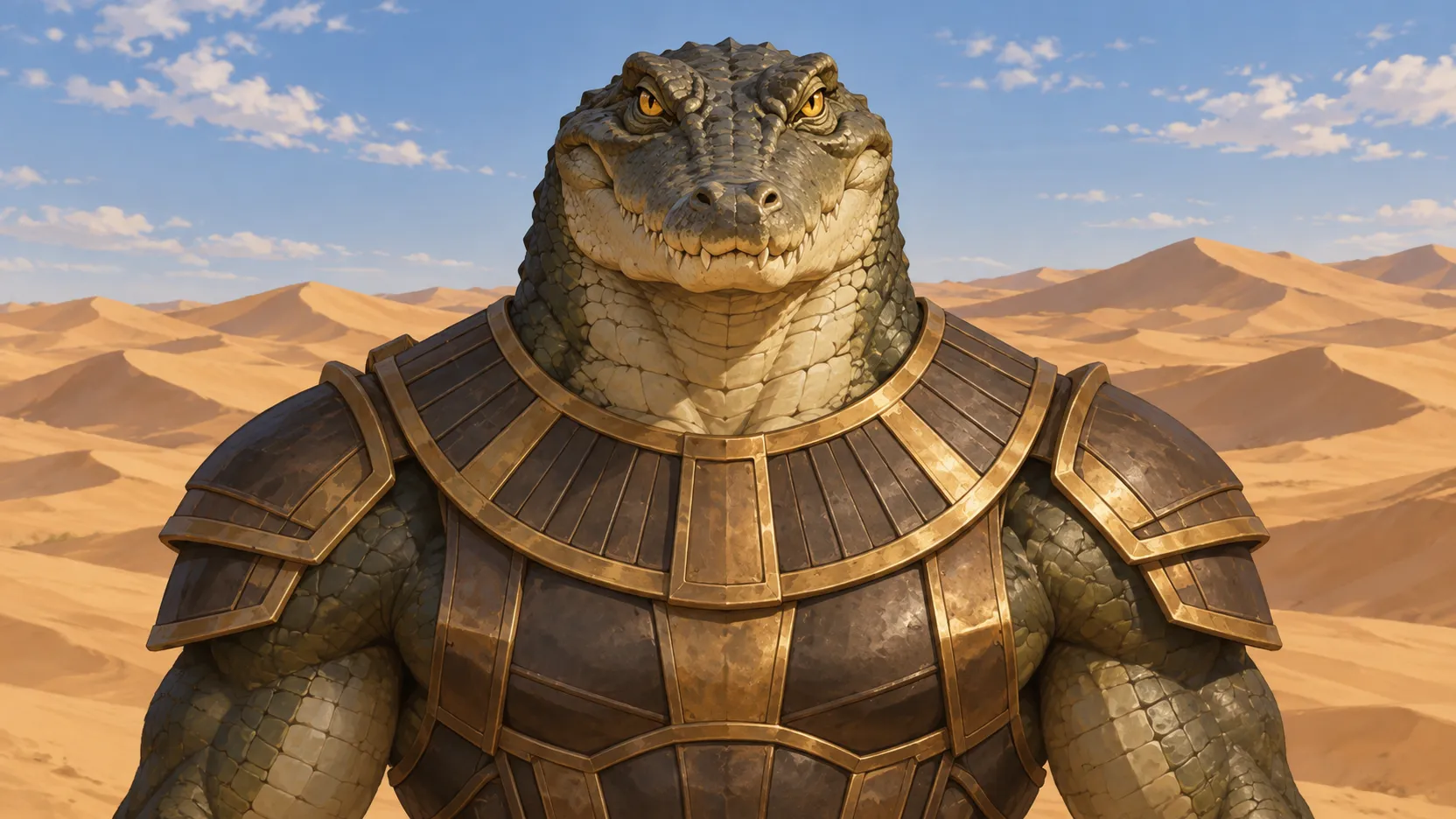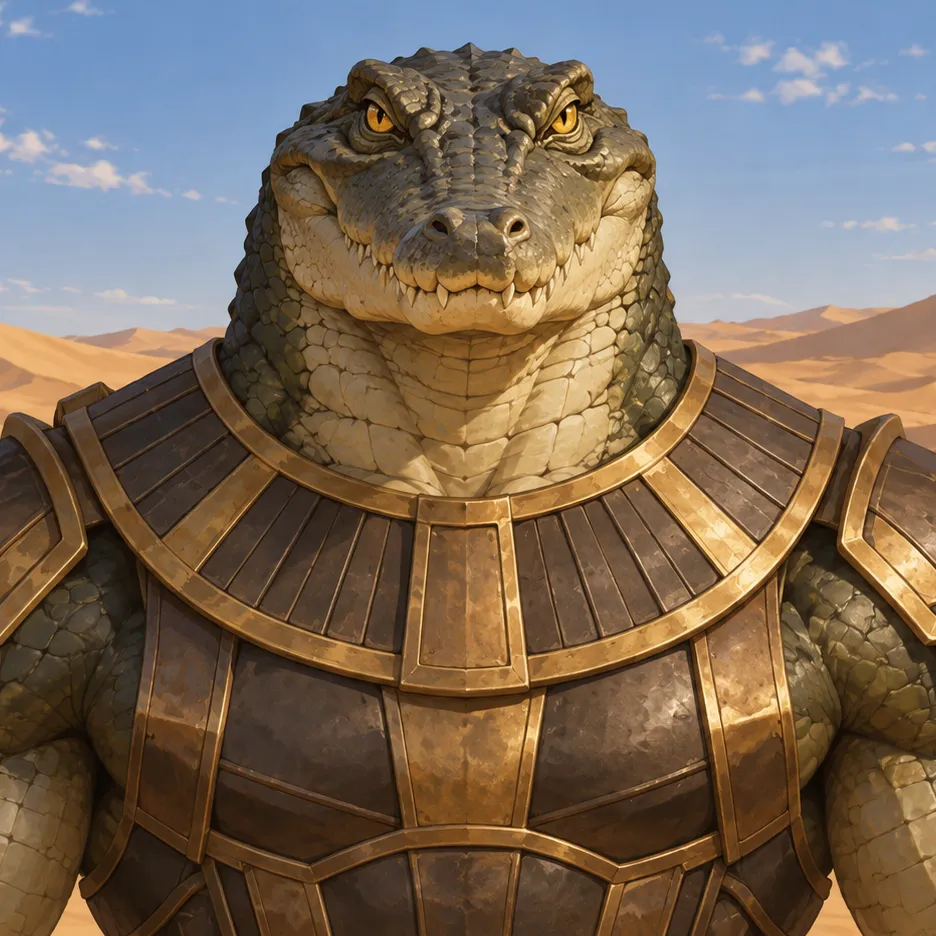
The ferryman struck Sobek across the eye with an oar.
It was a good blow. The man had only one arm, and he put his whole weight behind it. Sobek felt the wood split against the ridge above his eye. Then the man raised the broken shaft again, standing knee-deep in a ferry that was coming apart beneath him.
Behind him, a little boy clung to a basket. A woman had both hands over the boy’s mouth to keep him from screaming.
Sobek sank.
The ferryman shouted something triumphant. Under the brown water, the god opened his eyes. The ferry’s keel had cracked against a submerged tree; its stern sagged, taking the passengers with it. Eight pairs of legs crowded the shallows inside the hull. The smallest pair no longer reached the bottom.
Sobek slipped beneath the keel and rose.
His back took the weight. Water poured over the gunwale as the ferry lifted, tilted, then steadied upon the ridges of his hide. Through the planks he felt feet scramble toward its middle.
“Stay there,” he said.
The words passed through wood and bone. This time the ferryman did not strike.
The flood carried them toward a stone causeway that crossed the mouth of an old channel. On its crest stood a little shrine: white walls, a red door, a crocodile carved above the lintel. Sobek could smell the incense even through the water. Someone had offered him fresh bread that morning.
Now a drowned palm lay across the causeway. Reeds and branches gathered against it. The river pressed the whole tangle into the stone and curled backward in a slow, deep eddy.
The ferry was turning toward that eddy.
Sobek drove his tail against the current. The planks ground into his back. He could thrust the wreck clear, but the thrust would overturn it. He could dive beneath the obstruction, but the eight people above him could not.
“Landing steps,” he said. “To your left.”
“I see them.”
“Then steer.”
The ferryman looked at the splintered end of his oar.
Sobek felt him plant his feet.
The House Above the Water
They reached the steps sideways. Sobek wedged his body between the ferry and the current while the ferryman looped a rope over a stone post.
“Quickly,” the man told the others.
The woman lifted the boy. Two old men climbed after her, one pushing the other by the seat of his tunic. A girl dragged a sack to the gunwale.
“Leave it,” the ferryman said.
“It’s seed.”
He looked past her at the fields, already disappearing under brown water. Then he took the sack in his one hand and hurled it onto the steps.
“Now you.”
Sobek held until all eight were ashore. When he eased away, the ferry folded around its broken keel. The current pulled the stern under first. For a moment the bow remained, pointing toward the sky; then the rope snapped and it was gone.
The ferryman watched the place where it had vanished.
“Up,” Sobek said.
Above the landing, the steps divided. One flight led toward high ground. The other joined the causeway and the little shrine. Water was already spilling over the lowest tread.
The people climbed. The ferryman remained beside the stone post, looking down at the broad head in the water.
“You came late.”
Sobek could see the old scar where the man’s left arm ended beneath his sleeve. The flesh had healed in a rough white knot.
“To this crossing?”
“To the other one.”
The god said nothing. A branch struck his jaw and spun away.
“I called then,” the ferryman said.
Upstream, something heavy struck the causeway. The impact ran through the landing stones. A thin seam opened beneath the ferryman’s foot and spat muddy water.
Sobek turned his head toward the blocked channel. Beyond it lay a broad, low basin, fields harvested and waiting for the flood’s silt. The old passage could carry the water there. Until it opened, the rising river would press against this bank, eating the earth beneath the steps.
The causeway stood in the way.
His house stood on the causeway.
Sobek swam toward it.
“The stairs are breaking,” the ferryman called.
“Yes.”
“Then where are you going?”
The god put his jaws around the corner of the lowest foundation stone.
The ferryman understood. He glanced upward at the red door.
“There’s an offering vessel in there. Gold. Let me—”
“Take the people.”
The man hesitated only a moment. Then he turned and climbed, using the broken oar as a staff.
Sobek bit.
What the Teeth Could Break
The first stone did not move.
The masons had set it deep. Silt packed the joints; the weight of the causeway bore down upon it. Sobek dug his claws into the riverbed and pulled. His teeth scraped limestone. A pale cloud spread through the brown water.
Above him, feet struck the stairs. Five of the people had reached the upper path. The two old men were slower. The ferryman went back down to them.
Sobek shifted his bite into a joint.
He knew stone by pressure. He knew the hidden movement of the river against his belly, the tug that would become a whirlpool, the place where a bank was already hollow though grass still stood upon it. Here the water had found a weakness beneath the foundation. It probed the seam beside his teeth.
He drove his body into that seam.
The causeway shuddered. Bread fell from the offering table above and scattered across the surface. Sobek pulled again, his hind feet plowing trenches in the mud.
One tooth broke.
Pain shot through his jaw. His mouth filled with grit and the taste of his own blood. For an instant he released the stone, and the current drove his snout against the wall hard enough to ring the little bronze bell inside the shrine.
On the steps, the ferryman stopped.
“Keep climbing,” Sobek said.
He set his jaws again. The broken socket throbbed against the stone. This time he rolled.
The foundation came away with him.
Water punched through the gap. A second stone dropped, then a third, and the shrine leaned toward the old channel. Its red door swung open. Sobek saw the gold vessel flash once inside before the roof struck the water.
The river entered the opening with the sound of a long breath breaking.
For a moment the pressure against the landing eased.
Then the lower steps fell.
The bank beneath them had already washed away. Stone slabs tipped into the new current, one after another, climbing toward the people like a mouth closing from below.
The ferryman shoved one old man upward. The other fell to his knees. Both reached a narrow shelf of stone, but the flight above them split and slid into the water.
Five people stood on the high bank.
Three remained below it.
Sobek fought his way out of the broken foundation. A block struck his flank. He felt scales tear and kept swimming.
Between the Jaws
The shelf was scarcely wider than a sleeping mat. The two old men pressed against the bank. The ferryman stood in front of them, the broken oar braced across his body.
Sobek brought his head alongside the ledge.
“Come.”
The ferryman looked for somewhere to put his feet. Water sheeted over the god’s broad skull; his back lay submerged in the racing channel.
“How?”
Sobek opened his mouth and rested his lower jaw against the stone.
One of the old men began to weep.
The ferryman raised the oar.
“No.”
The god held still. Water rushed past his throat. The ledge trembled against his jaw.
“Across,” he said. “Behind the teeth.”
The ferryman’s sleeve fluttered empty at his side.
“That is what took my arm.”
Sobek could have told him that he was a god. Men had told one another that all their lives, and still this man was standing before him with a weapon made from the wreck of his livelihood.
He lowered his jaw until its edge lay flat with the ledge. He turned his head enough to shelter the opening from the current. The movement drove a loose stone into the broken socket. He kept his mouth open.
The older of the two men pushed past the ferryman.
“I won’t swim,” he said.
He stepped between the teeth, slipped, and fell forward. The ferryman caught his tunic with his remaining hand. For a moment both men hung over the jaw.
Sobek did not move.
The ferryman hauled him inward, then reached back for the second man. He pushed them close together where the broad lower jaw could bear them. All the while he kept the broken oar between the upper and lower teeth, as though its splintered shaft could hold the god open.
A crack ran across the shelf.
He looked down. His bare foot stood on a stone that was already tipping away.
Sobek felt the sudden weight as the man threw himself forward.
The ledge vanished.
For one stroke of his tail, the god had only the current beneath him. It caught his body and swung him toward the shattered causeway. He could dive and pass under the fallen blocks. He could not dive with the men.
He drove his feet downward until his claws found the bed.
Mud tore loose. His body slewed. The ferryman’s oar knocked against a tooth, and one of the old men cried out.
Sobek thrust again.
This time his claws struck stone. He pushed off it with all his weight and rose through the crosscurrent, head high, carrying the men above the water. A broken roof beam struck his side and turned with him. He beat it away with his tail.
Beyond the opening the channel widened. The water loosened its grip.
The ferryman was still holding the oar upright inside his mouth. Sobek could feel its end trembling against his palate.
He swam on.
When his belly met the sloping bank, he eased his jaw onto the mud and waited.
The men crawled out. The ferryman came last. He backed between the teeth, still watching the roof of the god’s mouth, and did not lower the oar until both feet were on land.
The woman was counting. She touched the boy, the girl, each of the old men. At eight she sat down abruptly in the wet grass.
For a while no one spoke.
Across the channel, a piece of the shrine’s white wall turned slowly in the eddy. The crocodile from above the lintel had broken through the middle.
The ferryman looked at it. Then he saw an intact oar drifting toward the bank.
He waded in to his knees and caught it.
On his way out, he passed close to Sobek’s jaw. His hand tightened around the shaft, but he did not raise it.
The god slipped backward into the channel. Water entered the empty socket where his tooth had been. Beyond the broken causeway, the flood spread thinly across the waiting fields, laying down its dark silt.