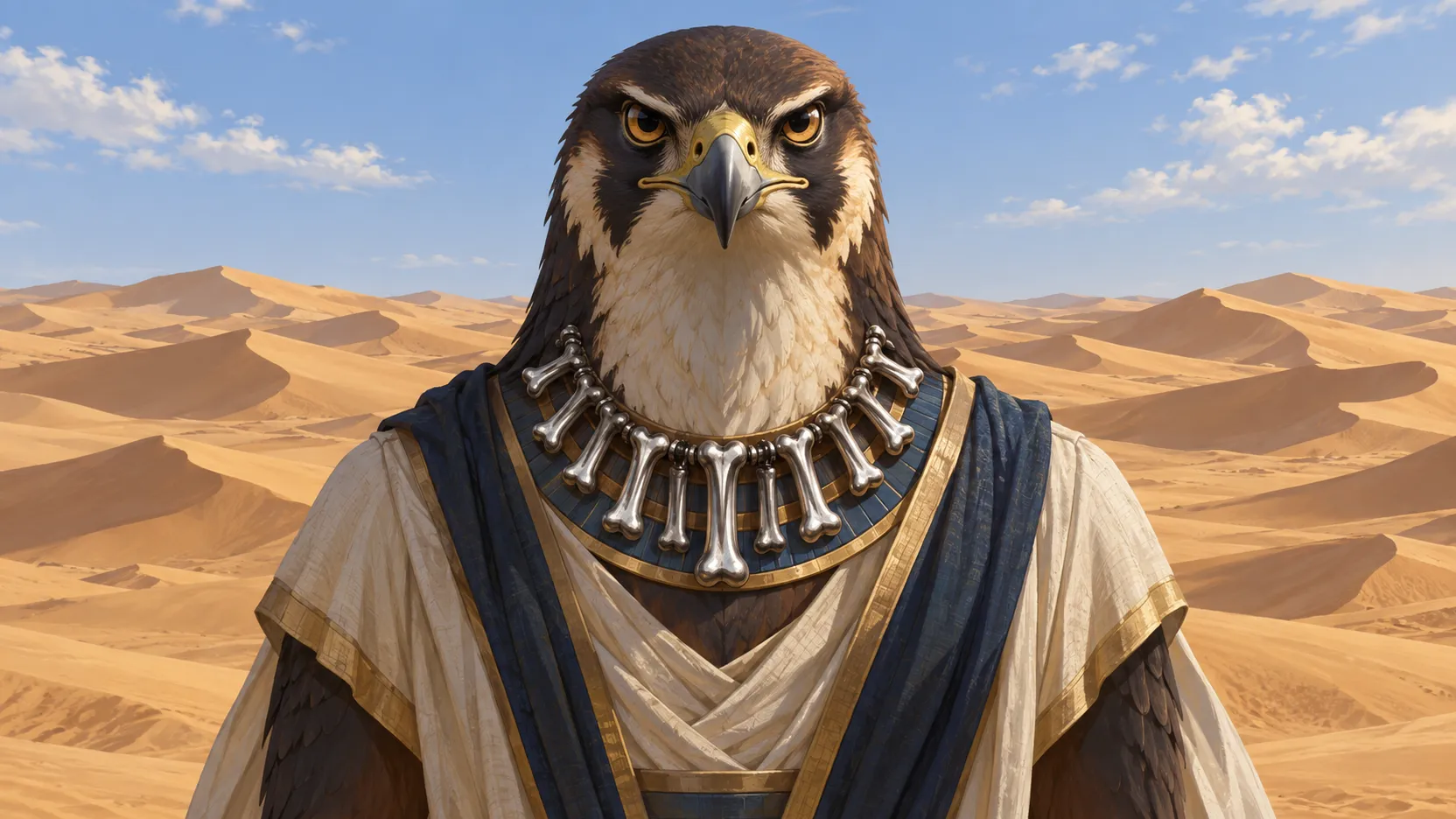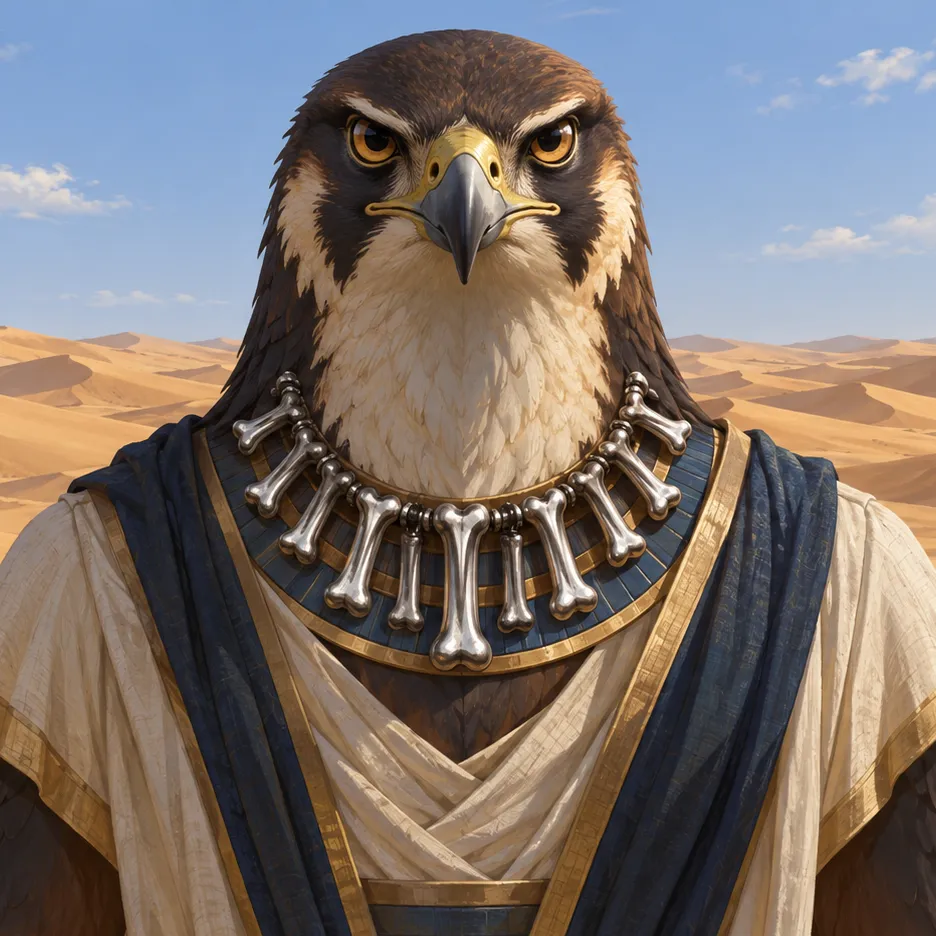
The old woman put one foot in Nemty’s boat before asking whether he would take her.
He caught the gunwale and tipped it toward her. She withdrew her foot quickly enough.
“No women today.”
She stood in the mud with a jar tucked under her arm. Beyond her, the landing lay empty. Nemty had carried the gods to the island at dawn, and now even the fishermen were keeping their boats against the bank. Across the channel, white linen moved between the trees. Someone had begun serving bread.
“My boy is over there,” she said. “With the cattle. Five days he has been waiting for food.”
“Then someone should have brought him food yesterday.”
“Yesterday I wasn’t here.”
Nemty slid the mooring rope through his fingers, feeling for worn places. Re-Harakhti had forbidden him to carry anyone resembling Isis. He had carried Isis before. He knew how little such an order meant when a goddess wanted something. Barring every woman was the only way to keep the command from slipping through his hands.
The old woman followed his glance toward the island.
“Is it Isis they’re afraid of?”
“Who said anyone was afraid?”
“You did. Just now, with your eyes.”
He pulled the rope tight. The boat knocked against the landing stake.
She set down her jar and opened a cloth. Inside lay a small loaf, cracked across the top.
“For the crossing.”
Nemty looked from the bread to the island. He had brought the judges, their attendants and their provisions through the morning current. Seth had planted a foot on the bow before it touched land and driven it hard against a stone. No one had waited to see whether the wood had split. They had stepped out and begun arguing about which god should inherit Osiris’s throne.
Now this woman offered him bread to risk their displeasure.
“Eat it,” he said.
“I thought you might be hungry.”
“I asked for no meal.”
“What would you ask for?”
He should have told her to leave. Instead, he let the rope rest loose in his palm.
The woman pulled a ring from her finger.
It was small, but the gold was thick. She held it above the open cloth. Nemty could see where long wearing had softened its inner edge.
He imagined its weight before he touched it. Gold enough to pay a carpenter to replace the bruised bow timber. Gold that would belong to him when the council had gone elsewhere to dispute its inheritance.
“Your boy must be very hungry.”
“Yes.”
“And you must be very sure he’s on that island.”
“Will you take me?”
Nemty put out his hand.
The Price of Passage
She stepped aboard more carefully this time. He placed the jar between her feet and told her to sit still. The ring went beneath a turn of the cord at his waist.
For a while there was only the oar and the water. Nemty knew this channel by the pressure it put against his wrists. Near the bank, the current tried to turn the stern; farther out, it took the blade cleanly and ran along the hull. His toes gripped the damp floor as he leaned into the stroke.
The woman watched his feet.
“Does it hurt?” she asked.
“What?”
“Standing so tightly.”
“It keeps you out of the river.”
She drew her jar closer.
A branch came down the channel, half submerged. Nemty saw its pale fork lift behind her shoulder. He turned the blade, let the stern swing and slipped past it. The woman put one hand against the side of the boat. Her fingers did not tremble.
“Have you crossed here before?” he asked.
“Many times.”
“With whom?”
“Today, with you.”
He looked at her then. The folds around her mouth were deep. Mud clung to the hem of her dress. Her gaze remained on him with an attention that made him wish he had asked his questions while she was still ashore.
He could turn back. The far bank was no nearer than the landing he had left. He could give her the ring, tell her the current was unsafe, put her jar back on the mud.
As his hand passed his waist, the gold pressed against his wrist.
“Keep your weight in the middle,” he said.
At the island he found a narrow opening between roots, well below the council’s landing. He brought the bow in gently. There would be no second strike against the timber today.
The woman rose.
“Wait.”
She stopped with her jar against her hip.
“Your ring.”
He had meant to ask why she would part with so much for a crossing. Hearing himself, he knew she could mistake it for an offer to return the payment. He almost let the mistake stand.
“Yes?” she said.
“Nothing. Mind the root.”
She stepped over it. Then she straightened, lifted the jar easily and went up the bank toward the trees.
There were no cattle in that direction.
Nemty put the oar against the mud to shove off. Before he could push, someone above the bank laughed: a woman’s laugh, young and clear.
He kept the blade planted.
The Shore of the Gods
Through the roots and hanging leaves, Nemty could see Seth standing apart from the others. A young woman faced him. The jar was gone. So were the bowed shoulders and the slow, careful walk.
Nemty’s fingers closed around the oar.
He could still leave. The current would carry him beyond the bend before Seth reached the water. Yet leaving the gods on their island would announce what he had done as surely as calling it aloud.
He drew the boat farther into the roots and listened.
The woman spoke of a dead husband, a son and a stranger trying to seize their cattle. She kept her voice low enough that Seth bent toward her. Nemty missed some of the words, but not the answer.
“The herd belongs to the son.”
“And the stranger?”
“Drive him out.”
The woman stepped away from Seth. A kite beat upward where she had stood, caught a branch and called down in Isis’s voice.
“Then remember your own judgment when you ask for my son’s inheritance.”
Seth lunged at the tree. The branch shook; the bird rose beyond his reach.
Nemty pulled the oar free of the mud.
Too late. Seth turned toward the bank.
“Ferryman!”
The word went through the trees. Nemty’s boat, his hiding place, the little opening he had chosen so carefully—all of it seemed suddenly exposed.
He climbed ashore. Mud sucked at his feet, then released them. At the top of the bank the gods had stopped eating.
Seth came toward him.
“You brought her.”
“She looked old.”
“She was Isis.”
“You saw her closer than I did.”
For a moment Nemty thought the answer might protect him. Seth had been deceived too. Surely the other gods could see that.
Seth seized the cord at Nemty’s waist. The ring fell between them and struck a root.
No one bent to pick it up.
“What did she pay you?” Seth asked.
Nemty looked at the gold lying in the dirt. He could no longer remember why a new bow timber had seemed worth this.
“You have it before you.”
Seth called the others to witness. Nemty tried to speak to Re-Harakhti, to explain the old woman, the jar, the exact words of the command. Hands closed on his arms. When they forced him down, he caught the earth with his toes as he had caught the boat’s floor a hundred thousand times.
It did not hold him.
Afterward, when they released his arms, he put out a foot to rise and fell on his side.
The front of it was gone.
He drew the other leg beneath him. Pain drove through it. He stayed where he was, beak pressed against the dust, while above him the voices returned to the question of the throne.
The Return Fare
The roots that had hidden his boat were difficult to reach on his knees.
Twice Nemty tried to stand. The second fall carried him halfway down the bank. He stopped trying. He caught a root in each hand, lowered himself to the water and dragged the boat close enough to reach its rim.
The hull tilted under his weight. Water came over the side.
He let go before it overturned.
Across the channel lay his landing stake. He could see the worn patch where his hands had polished the wood. No more than a few dozen strokes separated him from it.
He waited until his breathing slowed. Then he drew the boat parallel to the bank, held the gunwale with both hands and lowered his chest across it. One knee found the bottom. He shifted his weight, brought the other knee inside and lay still until the rocking ceased.
From here the oar was too high.
Nemty reached for its binding. The wet knot resisted him. He worked it with his thumbnail, loosened the cord and lowered the oar into the crook of a shorter support. When he tried a stroke, his knees slid. He hauled the mooring rope aboard and laid its rough coils beneath them.
“Come to the landing.”
Seth stood above him.
Nemty kept working at the binding.
“The council is crossing,” Seth said.
“Then they will need a boat.”
“They have one.”
Nemty pulled the knot tight. “They have a ferryman.”
Seth came down the bank. In his hand was the ring.
For an instant Nemty wanted it so badly that he nearly reached for it. He would need linen. He would need help getting from his landing to his door. The timber still needed replacing. Gold could pay for all of those things.
Seth held it out.
“Take it.”
Nemty looked at the broad, uninjured feet planted beside his boat.
“Put it away.”
“It bought her a crossing.”
“Yes.”
“And now it buys mine.”
Nemty took the ring. Seth released it at once.
The gold rested in the hollow of his palm. No stain remained on it. He rubbed its softened edge with his thumb, then leaned over the side and pressed it into the river mud until his fingers came out empty.
“No gold,” he said. “For me, or in my city.”
Seth caught the gunwale and pushed it down. Water climbed the planks beside Nemty’s knee.
“You think you can refuse me?”
Nemty gripped the opposite side. Pain sharpened his sight until he could distinguish every grain in the wet wood.
“If you sink it, you can swim.”
Seth held the boat there. Above them someone called his name. The council was waiting at the other landing.
Slowly, the pressure eased.
“What do you want?”
Nemty pointed to the rope around the root.
“Untie that. Hold the stern while I move. Then sit where I tell you.”
Seth looked up toward the voices. He looked down at the boat, at the mud, at the ring he could no longer see.
He bent to the rope.
Nemty shifted his knees onto the coils and took the oar. The boat scarcely moved beneath him while Seth held it. When the god climbed aboard, it rolled so sharply that Nemty had to brace his elbow against the side.
“Lower,” he said. “Your weight in the middle.”
Seth lowered himself.
Nemty pushed off. The first stroke tore at his shoulders. The second found water cleanly. His damaged feet trailed behind him, useless for holding the floor, but the rope stayed beneath his knees.
At the edge of the main current the stern began to swing.
“Left,” Nemty said.
Seth moved, and the bow came round.