The rope struck the water an arm’s length from Tia, and her daughter called from the shore behind her.
“Mother. You’ve forgotten me.”
Tia turned so quickly that she nearly dropped the little wooden boat.
There was her landing place, three worn steps cut into the riverbank. There was the mooring post with the split down its middle. A child stood at the top of the steps, one sandal on, one sandal held against her chest.
Tia had fastened those sandals that morning.
No. Not that morning. There had been fever after that, and women changing the linen beneath her, and a voice saying that her daughter must be taken outside.
The great boat was already passing. Its hull rose above her like a bank of dark wood; a narrow brightness lay along the gunwale. Someone on board hauled the loose rope towards safety.
“Leave it!” Tia shouted.
The hauling stopped.
She waded after the rope. The water reached her thighs, but she felt no cold. In her left hand she held the toy boat her daughter had put beside her body. Its sail was a scrap of household linen. One side had been painted red, and on the other the child had run out of paint.
The rope slipped beneath the surface.
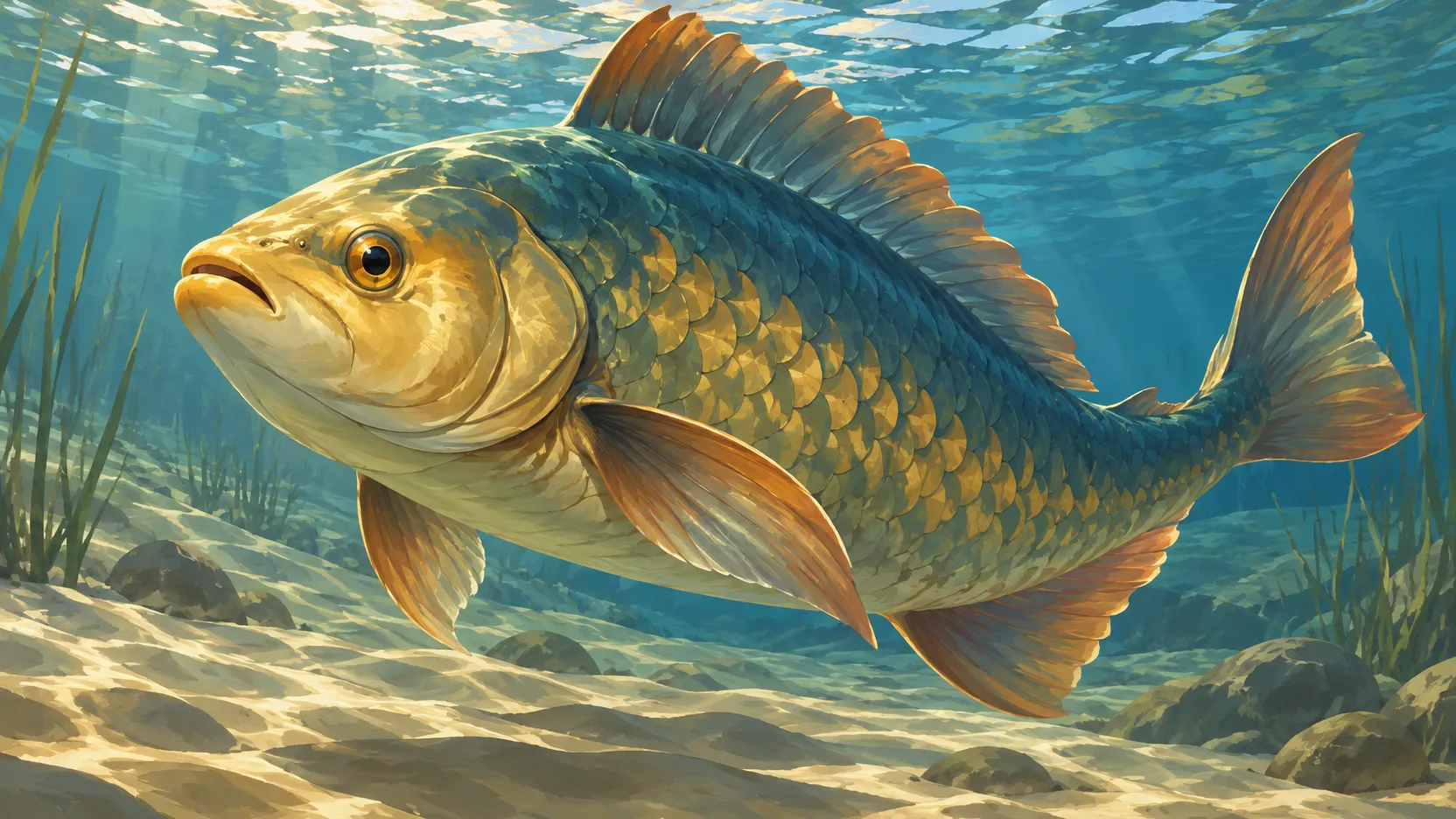
Then a fish turned over it.
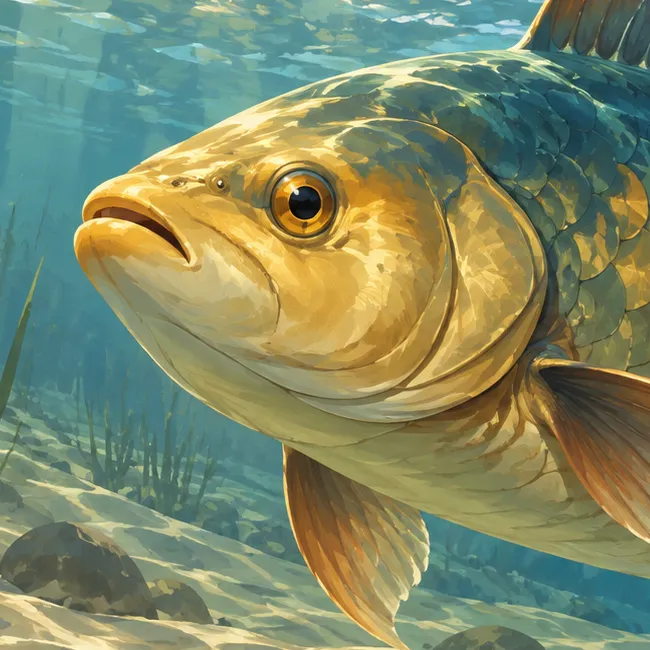
Its pale cheek caught the light. A fin lifted, folded, and the fish passed between Tia and the vast wooden bow. Behind its tail a small ridge moved across the water. The ridge touched the rope and showed her where it lay.
Tia plunged her free hand down and caught it.
Above her, a man with a shaved head leaned over the side. He wore a short linen kilt and had a boatman’s wide, scarred feet.
“Both hands,” he said.
“My child is there.”
He looked past her.
“Both hands.”
The rope tightened. Tia stumbled, driving her heels into the soft bottom. Beyond the boat, where she expected the opposite bank, a thin opening of light stretched from one end of the world to the other.
“Where are you going?”
“Into morning. This is Ra’s boat.”
“Take us.”
“Come, then.”
The child on the steps lifted her bare foot. There was a thorn in it. Tia could see the dark point beneath the skin.
She had pulled out that thorn herself, sitting by the door, with her daughter’s foot in her lap.
But the child was crying now.
Tia drew the rope towards the landing.
The Still Water
She had worked a ferry for eighteen years. A line led wrong could turn a boat broadside; a line checked at the right moment could bring it neatly against a bank. The weight travelling through her hand was enormous, but the principle should hold.
“Push your stern out!” she called. “I can bring you alongside.”
The man crouched on the gunwale.
“There is no landing there.”
“Three steps. A mooring post. Are you blind?”
“Look at the water.”
She looked at her daughter instead.
The child had lowered the sandal and was beckoning with it, impatient through her tears. She had always hated standing on one foot. Tia took another step towards her, then another, feeling the rope rasp beneath her fingers.
The fish passed close to Tia’s knee, swimming away from the bank. She turned her leg to avoid striking it. The little wake ran outward and vanished where the inlet met the channel.
Near the steps, the water remained smooth.
No ripple touched the stone. No ripple came from the child’s bare foot, though her toes dipped into the river.
Tia stopped.
“Mother. You’ve forgotten me.”
The words had the same catch in the same place.
Tia tightened her grip on the model boat. Her daughter had never spoken so carefully twice. Usually she started again before the first sentence was finished, changing what she wanted halfway through.
“What happened to your heel?” Tia asked.
The child raised her foot.
Tia remembered holding it. She remembered the little struggle when she brought the needle close, the solemn bargain for a honey cake, the howl when she drew the thorn. Afterwards her daughter had demanded two cakes because there had been blood.
“Tell me what you wanted,” Tia said.
“Come and get me.”
“What did you ask me for?”
The child’s face crumpled.
Tia moved before she could stop herself. Her knee found a hollow in the bottom and she fell sideways. The wooden model struck the water. She snatched it up; the wet sail clung to its mast.
Behind her, the loose end of the rope swept against the foot of the landing and caught beneath the lowest step. The length between the snag and the ship straightened across her wrist.
She had let a loose bend drop around her forearm. Now it drew shut.
Pain came at once, bright and convincing. She cried out and tried to wrench her hand free. The tightening line dragged her off balance towards the submerged step. Under her feet the mud was sloping steeply into the inlet.
On the boat, the man seized the line with both hands. His heels slid along the wet gunwale.
“Stop pulling that way!”
“I’m caught.”
“Open your hand.”
“I have!”
The loop tightened above her thumb. Her fingers spread uselessly. Across the inlet her child put on the sandal, took it off, and held it against her chest.
Tia watched.
One sandal on. One sandal held.
Beyond the boat, the opening of light had narrowed.
Before the Bow
The man dropped flat and reached towards her. His fingertips were much too far away.
“Give me the little boat.”
Tia pressed it against her ribs.
“She made it.”
“I need your other hand.”
With her teeth she caught the model’s wet sail. The thread gave way. For a moment she tasted the old cloth of her own house. The model fell into her palm again, its mast bare.
“I can’t,” she said.
The man did not tell her it was only wood. He shifted his weight and drew the line up a finger’s breadth. The pressure eased, then returned as something below the surface held the rest of the rope fast.
Tia looked down.
From her wrist, one length of rope rose towards the man. The other slanted down beneath the lowest step. She saw it now, a taut dark stroke against pale stone. The loose end had swept under the projecting edge; each pull from the ship wedged it harder against the stone.
At her knee the fish appeared again.
It faced the light beyond the bow. Its gills worked steadily. The long fin along its back tilted, and its body slid sideways without turning. Then a beat of the tail carried it forward.
It was moving across the current.
Tia raised her eyes to the surface. She had been staring at the bank, at the ship, at the hand stretched down to her. Now she saw the narrow seam beside the inlet. On one side nothing moved. On the other, flecks of foam travelled towards the bow.
The fish crossed that seam, turned, and crossed again. Water opened around its cheek. Behind it, for less than a heartbeat, the seam bent.
“Abtu,” the man said.
He spoke the name as he might have named a star to steer by.
Tia knew what she needed to do. Take the strain sideways. Slide the submerged line out from under the edge of the step. Reach the moving water before the boat passed beyond her.
First she had to free her wrist.
“Slack,” she told him.
“If I give you slack, you’ll go under.”
“Then give me little.”
He paid out a hand’s width. The loop loosened, barely. Tia pushed the model’s pointed bow beneath it.
The wood bit into her skin. She pushed harder, forcing the small hull between rope and wrist until the loop bore upon the model instead of her flesh. Red paint came away against the wet fibres.
From the steps came a new sound: her daughter laughing with her mouth full.
Tia stopped with the little boat wedged under the rope.
That laugh. She had thought she would never hear it again.
“Mother, look what I made.”
For one moment Tia was back at the table. There was paint on the child’s ear, a knife placed carefully beyond her reach, shavings of wood caught in the linen on Tia’s knees. She had meant to smooth the rough edge of the little hull. She had put it off until tomorrow.
The rope creaked.
Tia turned the model on its side. Its unfinished edge scraped her wrist. She folded her thumb into her palm and pulled.
Her hand came free.
The rope caught the little boat. Its mast snapped. Tia reached instinctively, but the line was already drawing tight, carrying the model down.
She could have closed her fingers around it.
Instead she seized the rope farther along, beyond the loop, and threw her weight sideways.
Her feet left the bottom.
Water covered her face. She opened her eyes into green dimness and a cloud of disturbed sand. The line ran past her shoulder towards the dark inlet. She kicked across it, seeking the current she had seen.
A pale cheek flashed ahead.
Abtu was swimming obliquely upward. Tia followed the angle, hauling the rope across her chest. Her injured hand would not close properly. She trapped the line between forearm and ribs and kicked again.
The snag held.
She felt its resistance all through her body. The rope had become a rigid thing joining her to the bottom. She could not reach air without surrendering the sideways pull.
Then the fish turned into the flowing channel. Its tail beat once, twice. The water caught Tia’s loose linen and pulled it in the same direction.
She spread her legs into that pull.
The line jerked free.
Released weight flung her towards the boat. Her head broke the surface under the bow, and the man caught a fistful of her clothing. Wood scraped her shoulder. She found a seam between two planks with her good hand, braced one foot, and climbed while he hauled.
They fell together onto the deck.
For a while Tia could do nothing but cough. Beside her lay the recovered rope, slack and ordinary. The end that had vanished beneath the inlet held a splinter of red-painted wood.
She touched it with one finger.
Then the deck shifted beneath her as the great boat gathered way.
Room for One More
The landing was still visible astern.
Tia knelt at the rail. The child waited on the upper step, sandal against her chest. With the widening distance Tia could no longer see the thorn.
At last the steps sank into their own reflection. The mooring post followed. For a moment the child stood alone upon the level water; then there was only water, and the boat’s wake running across it.
Tia held the small red splinter until it cut her palm.
The man beside her was coiling the rope.
“Is she alive?” Tia asked.
He stopped coiling.
“I don’t know.”
Tia nodded. It hurt less than a promise would have.
Ahead, light spread across the water. It found the wet deck and the coil, her damaged wrist, the man’s feet. Farther along the boat she could no longer look directly towards the brightness. She lowered her face into the warmth.
A splash sounded below the bow.
Abtu rose through the foam, its back briefly breaking the surface. Another fish moved beside it, deeper in the green.
“Ant,” the man said, seeing where she looked.
Their wakes crossed and opened out. Neither turned towards the place where the landing had been.
The man offered Tia the loose end of the rope.
“Can you coil?”
“With this hand.”
She slipped the red splinter into the fold of her linen and took the line. She made the first turn wide, so the next would lie easily inside it.
Below them, the two fish swam on into morning.