The Foot in the Road
The woman had almost pulled her foot free when Aker felt something pull from the other side.
He closed the stone around her ankle.
She cried out and struck the ground with both hands. Beside her, the towrope of the sun boat drew tight. It ran from the prow along a ledge beside the hull, through the hands of the dead. Iset held its trailing length. The haulers ahead stopped, one behind another, and the nearest turned to look.
“Keep moving,” Aker said.
His voice came through the rock beneath their feet. The woman lifted her head, searching for a face.
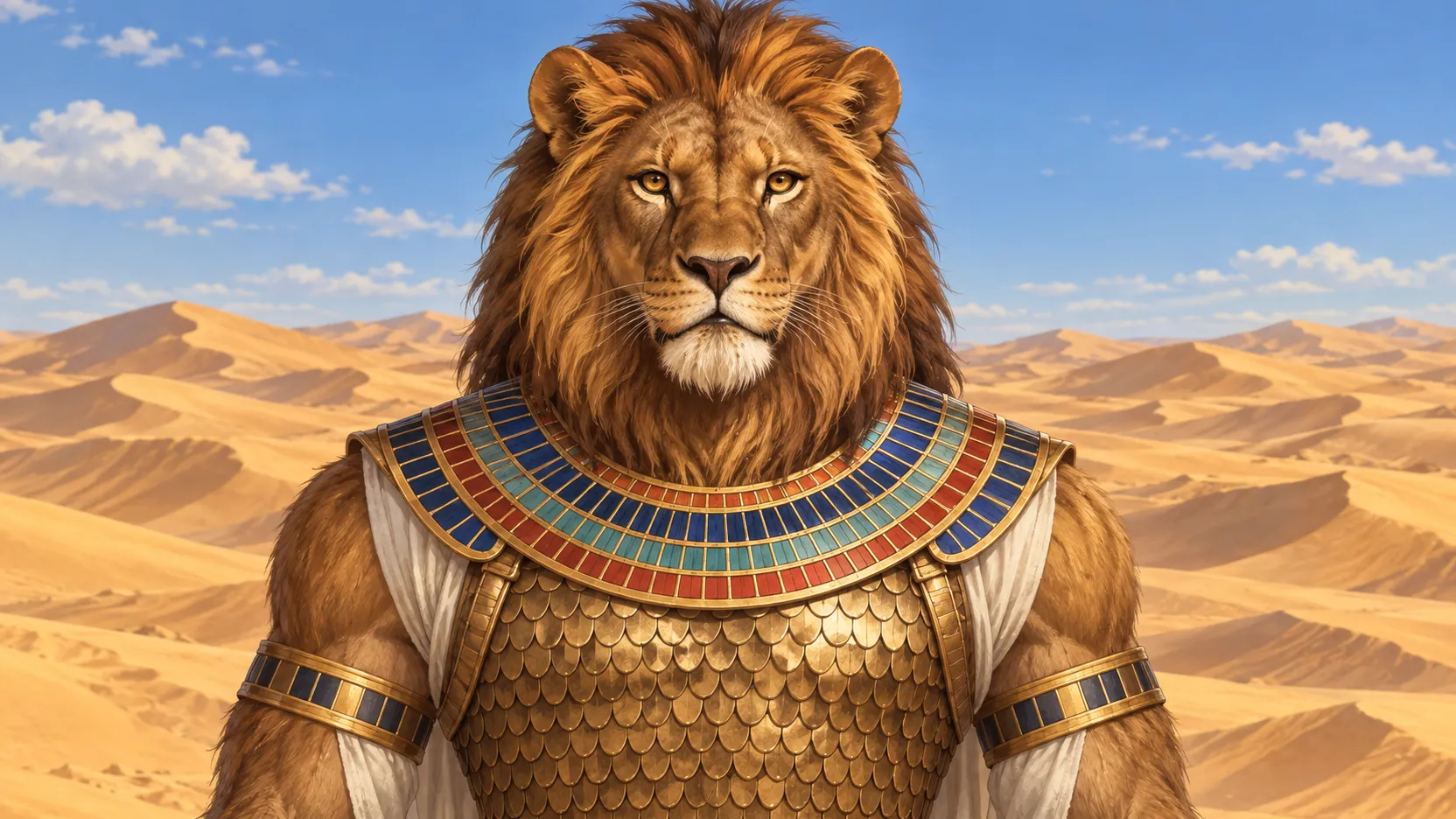
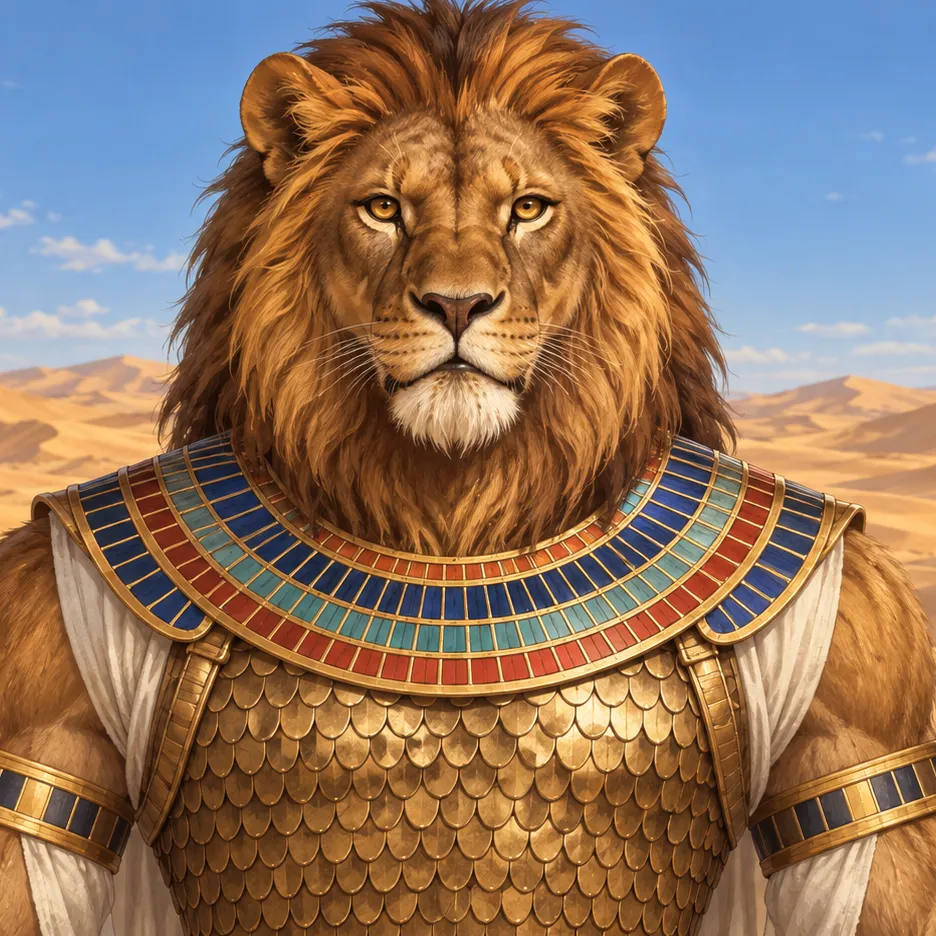
Far behind her, at the western end of the passage, his lion mouth lay against the dark. His other face watched the eastern opening, where the sky had begun to pale. Between them stretched the earth of his body. The boat of Ra was crossing his back, and this woman had put her foot into a crack that should not have been there.
Something cold pressed against the underside of her heel.
Aker tightened his hold.
“I cannot,” she said.
The rope dragged across her shoulder. She caught it before it slipped away, but the strain pulled her onto her side.
“Let go of the rope.”
“If I let go, they will leave me.”
“They cannot stop here.”
“Then loose my foot.”
Aker could feel every edge of the broken stone. He eased the upper lip of the crack a little, meaning to draw her heel sideways through the narrow opening.
A black tongue touched her sole.
He shut the gap. The woman fell forward, biting the rope to keep herself from screaming.
Deep in the earth, scales moved against scales.
Apep had found the road.
The creature had come up through a hollow beneath the western passage, flattening itself until Aker had felt no more than a thread of cold. Now it was winding around the root of the crack. Every time the woman struggled, its head rose closer to the light.
Ra stood in the boat ahead of her. The dim glow around him showed a steering oar, the backs of the haulers, a loose end of rope dragging over stone.
“How long?” the sun god asked.
Aker felt the eastern sky against his other face. Beyond the opening, a bird shifted on a branch. Soon it would call.
“Move the boat,” he said.
The haulers leaned into the rope.
The woman gripped it with both hands. Her arms straightened. For an instant Aker felt her ankle begin to come apart inside his stone.
He raised a ridge beneath the keel.
The boat struck it. Wood groaned, and everyone on the rope stumbled backward.
The woman lay still.
Aker waited for her to lift her head.
“You said they must move,” she whispered.
He had stopped the serpent. He had stopped the sun. Her foot was still in his mouth of stone.
“What is your name?” he asked.
“Iset.”
“Stay still, Iset.”
“I have been trying to leave this earth since they put me in it.”
What the Earth Held
Aker drove his weight down around the invading coil.
At the western end of his body, rock closed upon Apep. The serpent twisted. Its pressure ran beneath the road, seeking the thinner stone around Iset, and Aker hardened that too.
She made a small, breathless sound.
He stopped.
If he crushed the hollow completely, the road would rise and break the boat. If he released the pressure, the serpent would emerge beneath it. The one place where the ground was already open held a woman’s foot.
Apep pressed upward.
Aker lowered his eastern face until he could see Iset along the length of his back. She had begun working her fingers into the crack. Her nails scraped the stone.
“You will hurt your hands.”
“They are mine.”
She scraped again. A little dust came loose beneath her thumb.
“What did you do with them?” he asked.
“Pots.”
Her fingers continued to work. “Mostly jars. My sister said the mouths were too narrow. She broke one trying to get a ladle into it.”
She looked toward the stranded boat.
“I told her to use a smaller ladle.”
Aker felt the serpent slide backward. He followed it with his pressure, closing stone behind it, almost relieved to have a direction in which to push.
Then its head turned.
It had left a coil beneath Iset and was forcing another upward under the boat. The hull tilted. A hauler caught the gunwale; another dropped to his knees as the towrope swept his legs.
Ra braced his staff against the deck.
“Aker.”
The earth god held both coils. Stone cracked between them.
He could pull his eastern strength back into the passage and crush the serpent here. He could feel how it would happen: the hollow collapsing, the road folding, the keel snapping across his back. Everything inside him would be held fast.
Iset withdrew one bleeding hand from the crack.
“Is it you holding me?”
“Yes.”
She laid her palm flat on the ground.
“Then you can let me go.”
“Something will come through.”
“I know. It touched me.”
The serpent drove its head against the stone. Iset flinched but kept her hand where it was.
“Put it somewhere else.”
There was no empty ground beyond Aker in which to put it. There was only the road he had hardened for the sun, the deep body beneath it, and the two far ends of himself that held the horizons apart.
He felt inward, below the trapped coil.
There he could make room.
Apep would enter readily enough. To draw it down, he would have to loosen the earth beneath his own eastern face. The passage would remain supported from the west, but he would no longer see where the boat ended and the waiting sky began.
He looked once more through the eastern opening.
The bird had called. In a house beyond the river, someone was feeling for a cold hearth.
“Iset,” he said. “When your foot is free, can you stand?”
She pushed herself upright on her hands. Her injured leg trembled.
“I can pull.”
The Last Hauler
Aker opened the depth beneath the serpent.
Apep slipped into it so quickly that the shock ran from one horizon to the other. The earth god felt its weight descend, then turn. It had found living substance beneath the stone.
His eastern sight went dark.
For a moment he closed everything.
The boat lurched. Iset cried out.
Aker loosened his hold again, slowly, fighting the urge to harden around the pain. He drew the serpent farther down. Above it he made a thin, firm road, no thicker than it needed to be.
The stone parted around Iset’s ankle.
“Now.”
He felt her heel lift clear.
She fell. Her palms struck his back; one knee dragged across it. The towrope brushed the ground beside her, and she caught it.
“Pull,” Aker told the others.
The ridge beneath the keel sank. The boat slid forward with a long wooden creak.
Below the road, Apep uncoiled.
It thrust toward the east, following the same way as the sun. Aker let it advance a little, then curved the hollow downward. He could not destroy its hunger, but he could give it a path that ended inside him.
Each length of serpent that entered left less beneath the boat.
Each length hurt.
The haulers’ feet passed over him. He counted their steps through the stone, trying to judge the boat’s progress from the pull of the rope. But beyond the ruined ground of his eastern face he could feel almost nothing.
“Iset. Tell me where you are.”
“Beside the stern.”
Her voice came faintly through the rope’s scraping.
“Can you see the opening?”
“Yes.”
Apep struck upward. The road split under the steering oar.
“Keep moving.”
The serpent’s head entered the split. Aker felt its jaws open toward the keel. He drove a fold of earth between them. The jaws closed on him, and his western mouth opened in a roar that shook dust from the passage roof.
The boat stopped.
“Do not stop,” he said.
No feet moved.
Then Iset’s voice: “He is holding it. Pull!”
The rope tightened. One step, then another. The keel scraped over the serpent’s trapped mouth.
Aker could close now. He could feel the coil gathered beneath his eastern ground, nearly all of it within reach. A single contraction would seal the passage and drive Apep into the deep.
But he could not feel Iset.
“Where?”
No answer came. Wood scraped. Someone called to Ra.
Aker held the opening.
The serpent tore sideways through him.
“Iset.”
“The stern is through.” She was panting. “The rope caught. I am getting it—”
“Leave it.”
Apep began to withdraw. If it reached the broken road again, there would be nothing between its mouth and the departing sun.
Aker held.
A loose rope end struck the ground. He heard a foot drag, a fall, then the rough intake of a breath.
“I am clear.”
He closed.
The earth came together beneath the eastern horizon. Apep’s coils struck the sealed hollow. Above it, the eastern road heaved, pitching the departing boat upward. The haulers cried out as Ra rose away from them into the morning sky.
Aker kept his weight upon the serpent until the last vibration had gone deep.
When sight returned to his eastern face, the sun was above the opening.
Iset sat beside his forepaw. She had pulled the torn hem of her garment around her ankle. The other dead were farther up the road, waiting for her.
“You can go,” he said.
She tested her foot against the ground. Then she reached toward a fresh crack in the stone beside her.
Aker felt her thumb press along its edge, smoothing away a loose grain, as though she had found a flaw in a jar before firing.
“This will catch someone,” she said.
He lowered the edge.
Iset stood, took a step, and waited until she knew she could take another. At the bend she turned to look back.
The small way through the earth was still open.